
There is something special about a Bible that looks used in the best way.
Not damaged. Not neglected. But loved. Well Loved!
You can often tell when a Bible has been part of someone’s real life. The pages are soft. Certain verses are underlined three times.
Notes fill the margins. A prayer is tucked into the back. Maybe there is a date beside a passage that carried someone through grief, change, or a fresh season of faith.
That kind of Bible tells a story.
If you have ever wanted your Bible study time to feel more personal, more meaningful, and more engaging, “loading” your Bible can be a wonderful place to start.
A loaded Bible is simply a Bible that has been thoughtfully filled with tools, notes, highlights, and personal touches that help you interact with Scripture more deeply. It is not about making your Bible look perfect. It is about making it useful, beautiful, and well-loved.
Here are creative and practical loaded Bible ideas to help you turn your Bible into a rich study companion.
1. Create a Color-Coding System for Themes
One of the easiest ways to make your Bible more useful is to create a color-coding system.
You do not need a huge set of supplies. A few highlighters or Bible-safe pens can go a long way. The goal is to assign colors to key themes so you can quickly spot them as you read.
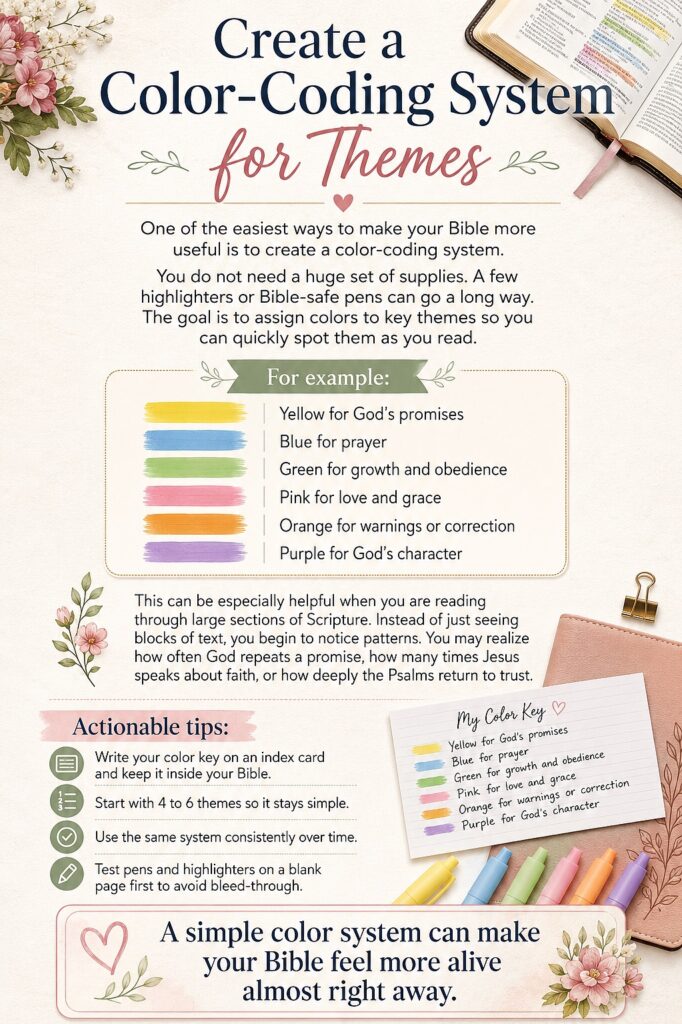
For example:
- Yellow for God’s promises
- Blue for prayer
- Green for growth and obedience
- Pink for love and grace
- Orange for warnings or correction
- Purple for God’s character
This can be especially helpful when you are reading through large sections of Scripture. Instead of just seeing blocks of text, you begin to notice patterns. You may realize how often God repeats a promise, how many times Jesus speaks about faith, or how deeply the Psalms return to trust.
Actionable tips:
- Write your color key on an index card and keep it inside your Bible.
- Start with 4 to 6 themes so it stays simple.
- Use the same system consistently over time.
- Test pens and highlighters on a blank page first to avoid bleed-through.
A simple color system can make your Bible feel more alive almost right away.
2. Add Wide Margins with Tip-Ins or Sticky Notes
Sometimes the biggest frustration in Bible study is not having enough room to write.
If your Bible has narrow margins, you can still make space. Tip-ins and sticky notes are a great solution. A tip-in is simply an extra piece of paper or cardstock taped into your Bible so it folds in and out. It gives you more room for notes without covering the text.
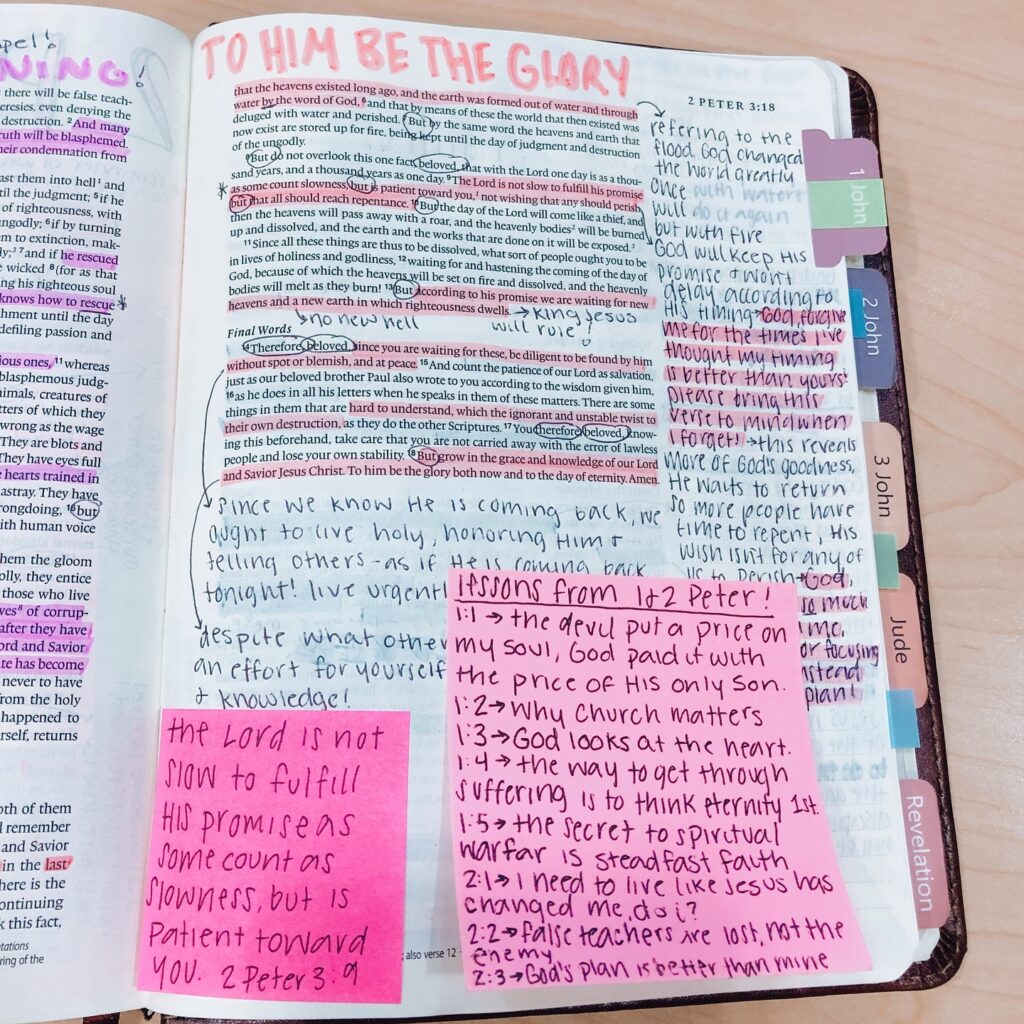
You can use these for:
- Sermon notes
- Word studies
- Cross-references
- Personal reflections
- Questions to revisit later
This idea is especially helpful when a passage keeps speaking to you over time. One little margin note often turns into a whole page of insight.
I actually created 10 free Bible tip-ins you can download. Check it out!
Actionable tips:
- Use washi tape or archival tape so pages stay neat and flexible.
- Fold paper to match the height of your Bible page.
- Use sticky notes for temporary thoughts and tip-ins for long-term study notes.
- Keep a few blank note cards tucked in the back for future use.
There is something so satisfying about opening a Bible and finding layers of thought tucked inside it.
3. Build a Personal Index in the Front or Back
A personal index can save you a lot of time and make your study more organized.
This is one of those ideas that sounds simple, but it becomes incredibly useful. Pick a few blank pages in the front or back of your Bible and turn them into a homemade index. Whenever you study a topic, write down the subject and the page numbers where you made notes.
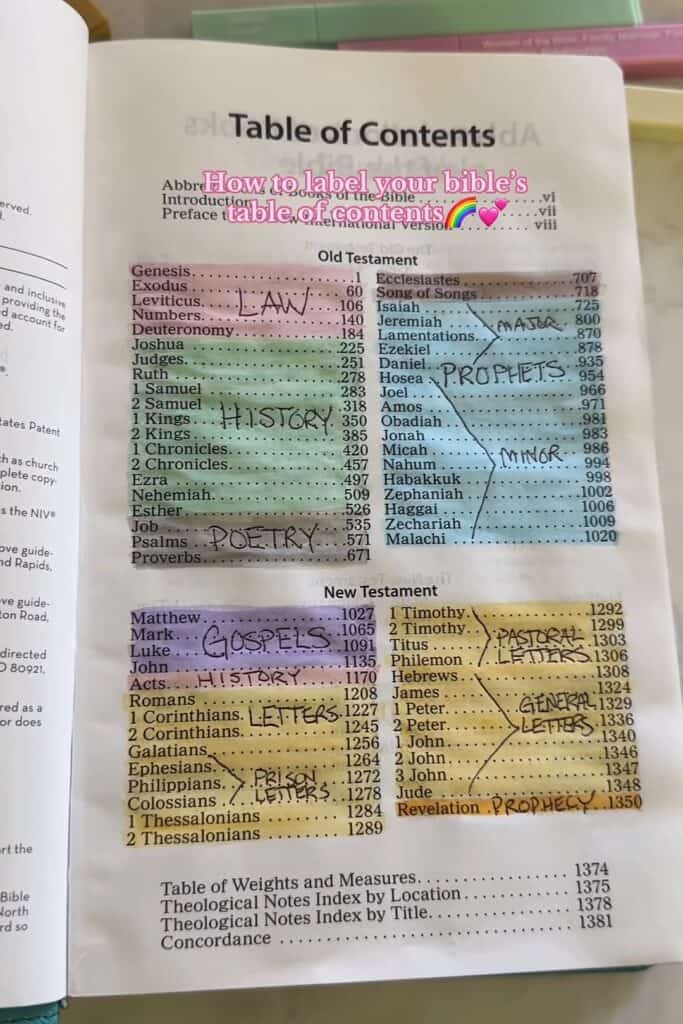
You might include topics like:
- Fear
- Forgiveness
- Prayer
- Anxiety
- Wisdom
- Marriage
- Hope
- Spiritual warfare
Over time, your index becomes a custom guide to your own Bible study journey.
Actionable tips:
- Leave several pages blank for your index if possible.
- Arrange topics alphabetically for easy use.
- Add page numbers and short note labels.
- Update the index once a week so it does not get overwhelming.
This is especially helpful if you tend to study by topic or want to revisit what God has taught you in past seasons.
4. Use Verse Mapping Inserts
Verse mapping is a wonderful way to slow down and really dig into a passage.
Instead of reading a verse quickly and moving on, verse mapping helps you break it apart. You look at keywords, context, cross-references, definitions, and the overall meaning. It is one of the best ways to move from casual reading to deeper study.
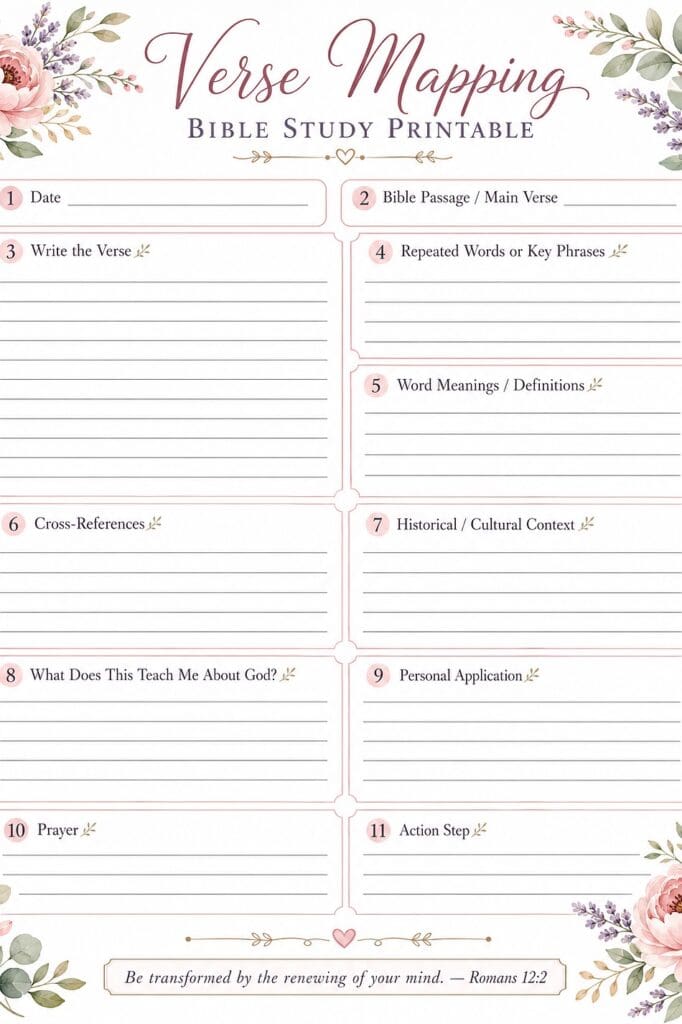
You can create verse mapping inserts and tuck them next to the verses you are studying. Even the SOAP method would work great. These inserts can include:
- The main verse
- Repeated words
- Original word meanings
- Related passages
- Historical context
- Personal application
- A short prayer
Actionable tips:
- Print small verse mapping templates and keep them inside your Bible.
- Choose one key verse each week to study this way.
- Use this method for confusing or especially meaningful passages.
- Keep your notes simple and clear so they are easy to revisit.
This kind of study can turn one verse into a whole conversation with God’s Word.
5. Highlight with Purpose, Not Just Preference
A lot of us start out highlighting whatever stands out in the moment. And before long, half the page is bright yellow and nothing actually stands out anymore.
That is where purposeful highlighting helps.
Instead of highlighting everything you like, decide what deserves special attention. Maybe you only highlight commands, repeated words, or promises you want to memorize. The key is to make your highlighting meaningful.
A thoughtful highlighting system makes your Bible easier to study later because it points your eyes to what matters most.
Actionable tips:
- Ask, “Why am I highlighting this?” before marking a verse.
- Limit yourself to one or two highlights per short passage.
- Use underlining for one type of note and highlighting for another.
- Review old highlights every so often to see what themes keep showing up.
A little restraint here can make your Bible much more powerful as a study tool.
6. Tuck in Prayer Cards and Answered Prayer Notes
This idea adds a deeply personal layer to Bible study.
Keep small prayer cards, folded paper slips, or note cards inside your Bible. Write down prayer requests, Scriptures you are praying over, and later, record how God answered. You can keep these tucked into the pages where certain verses became especially meaningful.
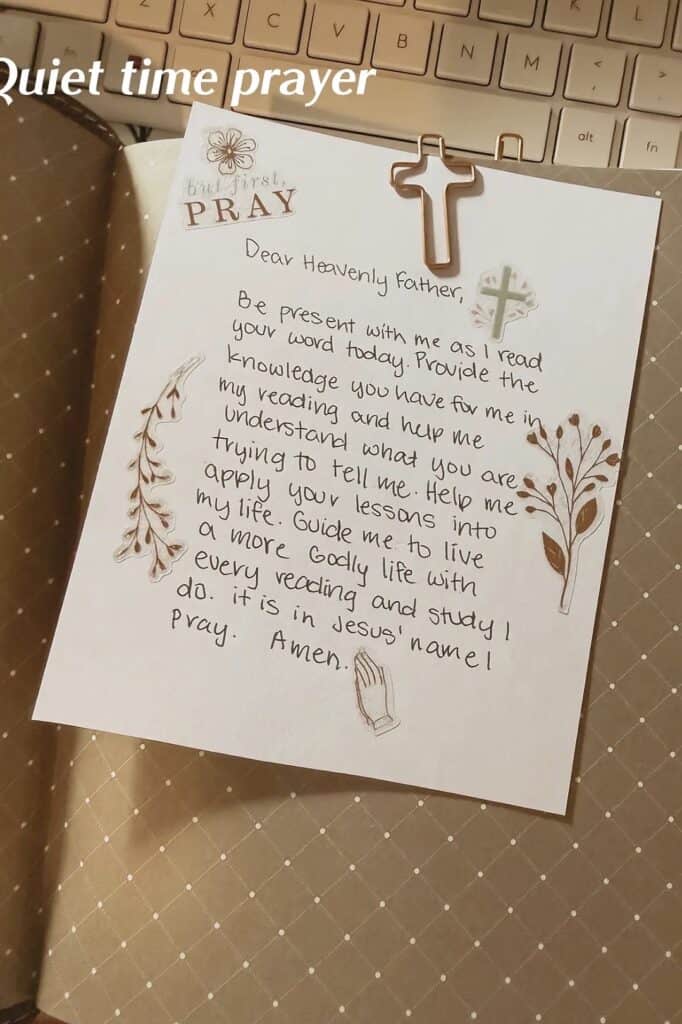
For example, if Psalm 46 strengthened you during a hard season, you might tuck a prayer card there with the date and a short note about what you were facing. Later, when you look back, you will see not only the verse but also the faithfulness of God in your own life.
Actionable tips:
- Use one card for current prayers and another for answered ones.
- Date your prayer notes.
- Pair prayer requests with specific verses.
- Review older cards monthly to remember God’s faithfulness.
This turns your Bible into more than a study book. It becomes a testimony.
7. Add Tabs for Books, Topics, or Frequently Used Sections
Tabs are practical, but they can also make your Bible feel more inviting to use.
Book tabs help you flip quickly to the passage you need. Topic tabs can point to sections you visit often, like favorite Psalms, promises, parables, or key study pages. If you teach, lead a group, or attend church regularly, tabs can make a big difference.
And honestly, there is just something cheerful about opening a Bible that is organized in a way that works for you.
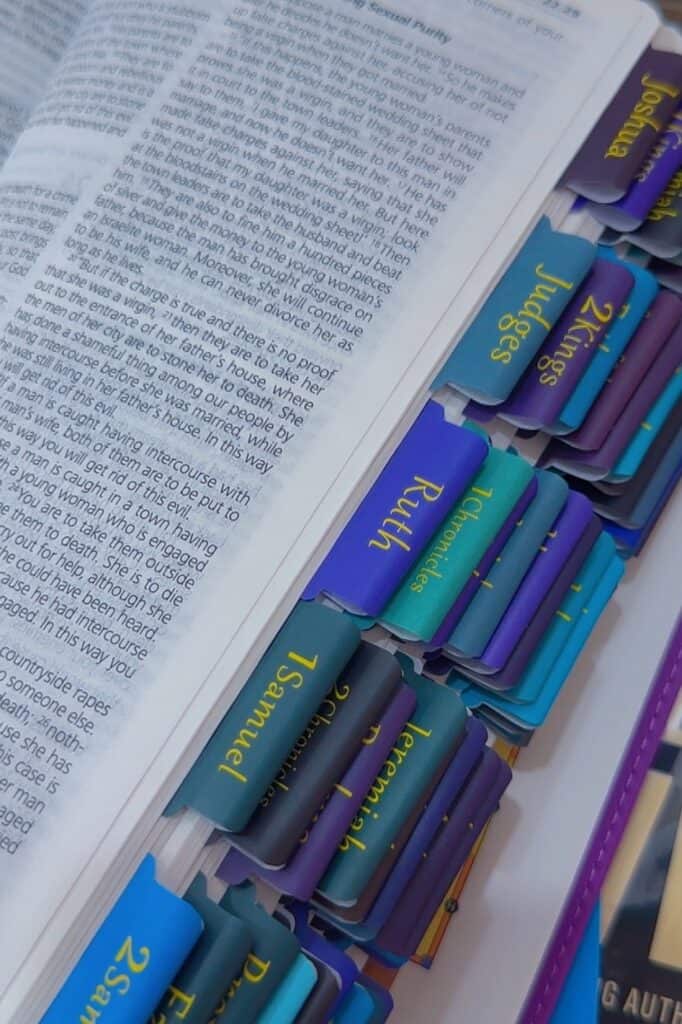
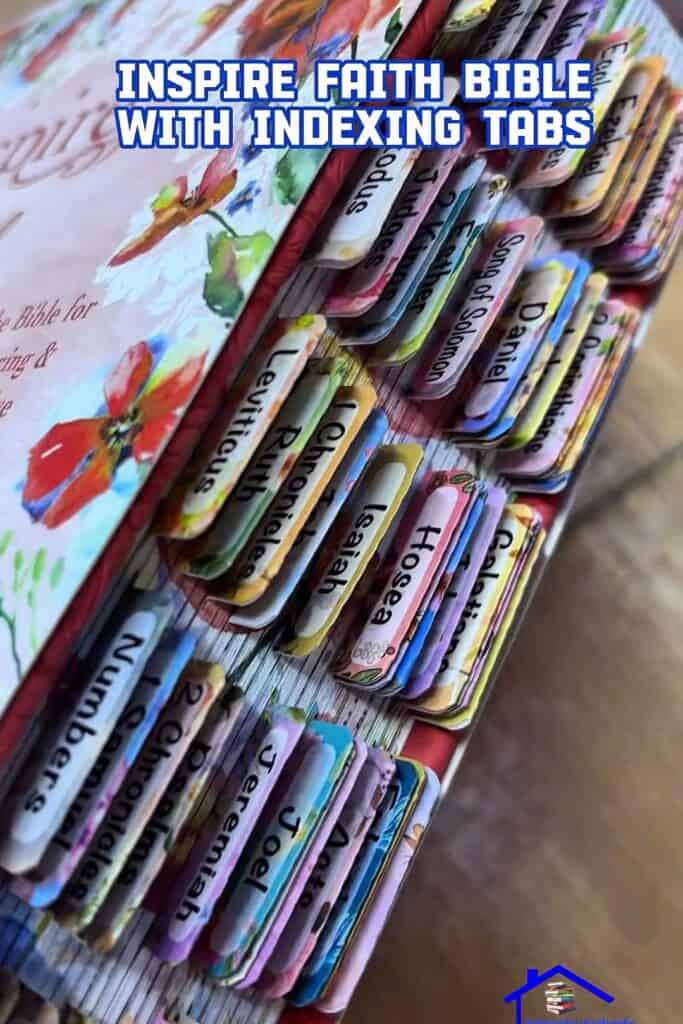
Actionable tips:
- Choose durable tabs that will hold up over time.
- Use neutral or coordinated colors for a clean look.
- Add tabs slowly if doing all 66 books feels like too much.
- Include a few custom tabs for things like “Prayer,” “Gospel,” or “Memory Verses.”
This is one of the simplest ways to make your Bible both beautiful and functional.
8. Write Mini Devotionals in the Margins
Not every note in your Bible has to be academic.
Some of the most meaningful notes are the ones where you write what God showed you in a plain, honest sentence.
A mini devotional note might be a personal takeaway, a conviction, a comfort, or a truth you do not want to forget. Kind of like a mini journal right in your Bible.
For example:
- “God’s timing is slower than mine, but always better.”
- “Jesus sees faith even when it is trembling.”
- “Obedience starts before I feel ready.”
These little reflections become markers of growth. Months or years later, they can bring back exactly what God was teaching you in that season.
Actionable tips:
- Keep devotional notes short, around one or two sentences.
- Include dates when possible.
- Use different handwriting colors if you want to track different seasons.
- Focus on application, not just observation.
This gives your Bible warmth. It makes your study feel lived-in and real.
9. Create a “Life Verse” or “Season Verse” Collection
Most believers have a few verses that stay close through every season. Others become important for just one chapter of life.
Why not create a collection of them inside your Bible?
You can dedicate a blank page or insert to your life verses and season verses. Add the reference, a short note, and the date or reason it mattered. This can become a powerful record of how God has met you over time.
You might include verses for:
- Grief
- New beginnings
- Waiting seasons
- Parenting
- Leadership
- Healing
- Trust
- Joy
Actionable tips:
- Keep one master list in the front or back of your Bible.
- Mark those verses with a small symbol, like a heart or star.
- Revisit the list at the start of each new season.
- Memorize one verse from the collection each month.
This is a beautiful way to trace God’s voice through your own story.
10. Include Study Tools in a Back Pocket or Pouch
A loaded Bible is not only about what is written on the pages. It is also about what you keep nearby.
If your Bible has a back pocket, use it. If not, add a small pouch, envelope, or Bible cover organizer. This gives you one place to keep Bible tools that support your study time.
Helpful items might include:
- A pencil or Bible pen
- Sticky flags
- A ruler or bookmark
- Prayer cards
- A reading plan
- Memory verse cards
- A small notepad
Having these tools ready removes friction. You are more likely to pause, mark, pray, and reflect when everything is within reach.
Actionable tips:
- Keep only essentials so your Bible does not get too bulky.
- Refresh the contents once a month.
- Store seasonal reading plans or church notes inside.
- Use a slim zip pouch if you carry your Bible often.
Sometimes the smallest bit of preparation makes regular Bible study much easier.
11. Mark Cross-References and Connections by Hand
Most study Bibles include cross-references, but writing your own can help the connections stick.
When one verse reminds you of another, write the reference in the margin. If a prophecy connects to its fulfillment, note it. If a Psalm echoes something in the New Testament, trace that link. This helps you see the unity of Scripture in a richer way.
Over time, your Bible starts to show how the whole story fits together.
You begin to notice that the Bible is not just a collection of separate books. It is one unfolding story of God’s character, promises, redemption, and faithfulness.
Actionable tips:
- Start by linking repeated themes like covenant, grace, shepherding, or redemption.
- Use arrows, tiny symbols, or abbreviations to keep notes neat.
- Write full references even if you do not have room for full explanations.
- Revisit familiar passages and ask what other Scriptures they connect to.
This idea can completely change the way you read the Bible.
12. Make It Beautiful in a Way That Helps You Return to It
Let’s be honest. Beauty matters more than we sometimes admit.
Not because your Bible has to look impressive. Not because it needs to belong on social media. But because thoughtful beauty can draw you in. It can make opening your Bible feel welcoming and personal instead of rushed or mechanical.
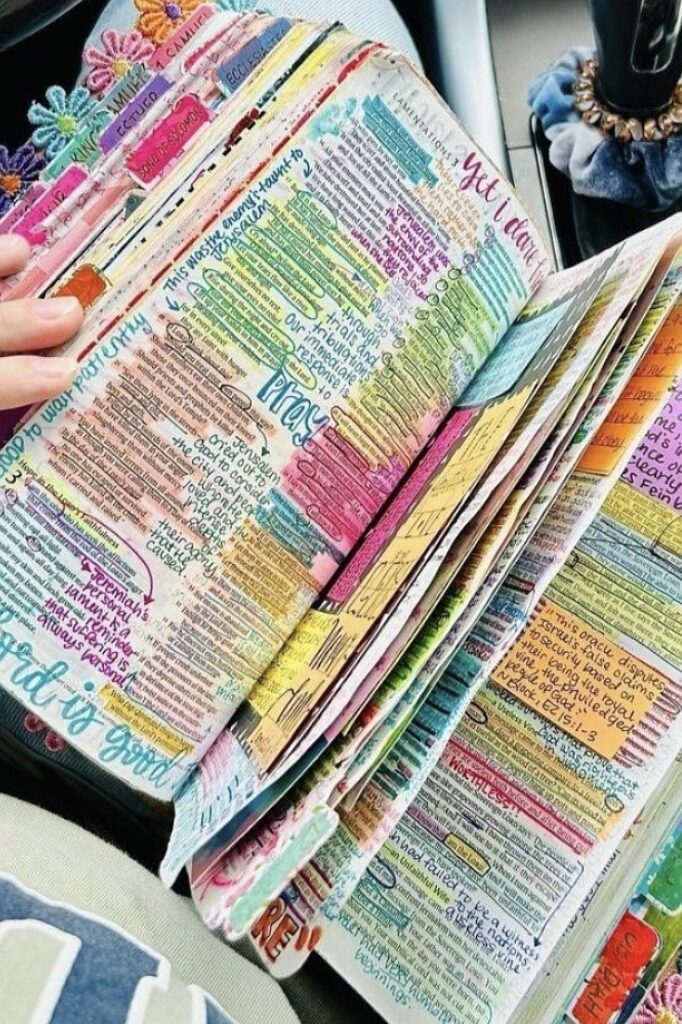
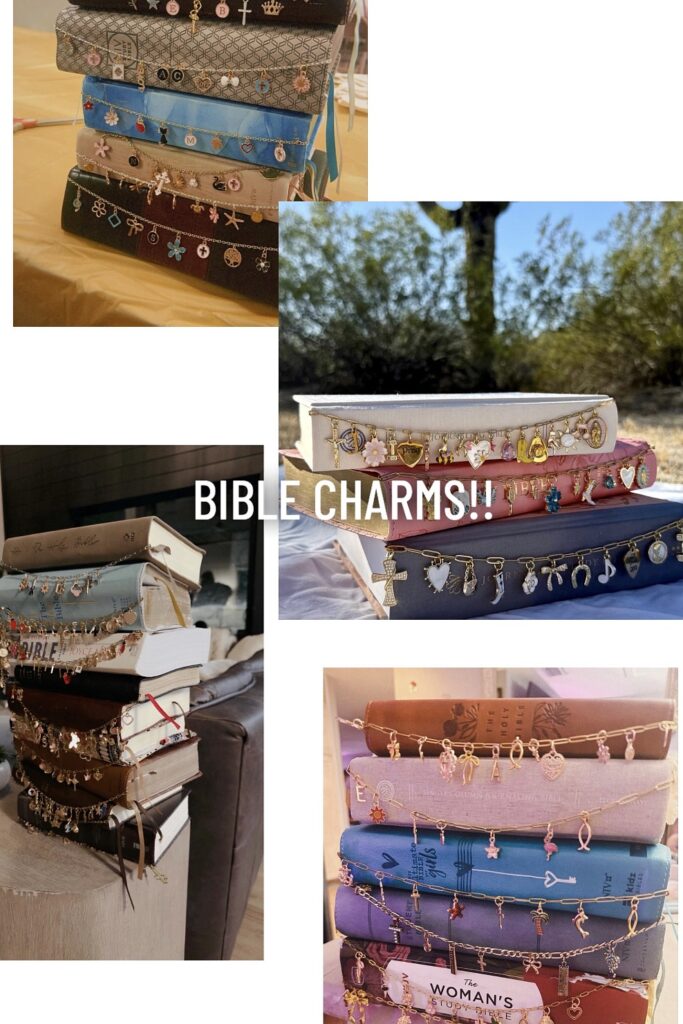
That might mean:
- Using pretty but readable pens
- Adding gentle floral designs or borders (or things you personally really enjoy…remember we don’t have to all look the same)
- Using coordinated tabs and notes
- Creating neat headings
- Adding hand-lettered key words
- Choosing bookmarks you love
The point is not decoration for decoration’s sake. The point is creating a Bible you want to come back to again and again.
Actionable tips:
- Keep beauty functional, not distracting.
- Leave white space so pages stay readable.
- Choose a simple visual style and stick with it.
- Focus on elements that support your study habits.
A beautiful Bible can become a quiet invitation to sit down, slow down, and listen.
Final Thoughts
A well-loved Bible does not happen all at once.
It is built little by little. One note at a time. One prayer card at a time. One underlined promise, one dated margin note, one quiet moment with God’s Word at a time.
So if your Bible is still clean and untouched, do not worry. Everyone starts somewhere. And if your Bible is already full of color, notes, tabs, and tucked-in scraps of paper, that is a beautiful thing too.
The goal is not perfection. The goal is connection.
As you personalize your Bible, you are not just making it prettier or more organized. You are creating a space where you can meet with God, remember His faithfulness, and engage with Scripture in a personal, lasting way.
May your Bible become a place of growth, comfort, truth, and joy. And may every page draw you deeper into the heart of God.


Melissa is a passionate minister, speaker and an ongoing learner of the Bible. She has been involved in church and vocational ministry for over 18 years. And is the founder of Think About Such Things. She has the heart to equip the saints by helping them get into the Word of God and fall more in love with Jesus. She also enjoys family, cooking, and reading.
She has spoken in churches in California, Oregon, Texas, and Mexico and has been featured in Guidepost Magazine and All Recipes Magazine. Read More…