
There is something powerful about learning the names of Jesus. And I do not mean simply memorizing a list of titles or collecting interesting facts about the Bible.
The names of Jesus reveal who He is. They show us His character, His authority, His mission, and His heart toward us. He is our Savior, our Shepherd, our peace, our light, and so much more.
But here is where it becomes deeply personal: as we learn who Jesus is, we also begin to understand who we are in Him.
When I know Jesus as my Redeemer, I understand that my past no longer owns me. When I know Him as the Good Shepherd, I remember that I am known, cared for, and never abandoned. When I know Him as the Lamb of God, I can stop defining myself by the guilt He has already taken away.
Knowing His names can challenge lies we have believed for years. It can change the way we see God, the way we see ourselves, and the way we walk through difficult seasons. There is incredible healing and freedom in knowing Jesus for who He truly is.
I have spent quite a bit of time studying the names of God, including Jehovah Jireh, El Roi, Jehovah Rapha, and Jehovah Shalom. Each name gives us another glimpse of God’s nature and His relationship with His people.
This time, however, we are focusing specifically on the names and titles Scripture gives to Jesus Christ.
Are These All Personal Names of Jesus?
Not every entry on this list is a personal name in the same way that Jesus is. Some are prophetic names, while others are titles or descriptions Jesus used for Himself. Scripture also records names that other people used when they recognized who He was.
For example, Jesus is His given name. Christ is a title that identifies Him as the promised Messiah. The Good Shepherd is a description Jesus used to reveal what He is like and how He cares for His people.
All of them teach us something important about Him.
The names and titles below are specifically applied to Jesus in Scripture rather than being a general list of names used for God the Father.
1. Jesus — The Lord Saves
“And she will bring forth a Son, and you shall call His name JESUS, for He will save His people from their sins.” — Matthew 1:21 NKJV
The name Jesus comes to us through the Greek form of the Hebrew name Yeshua or Joshua. It carries the meaning “The Lord saves” or “The Lord is salvation.”


Before Jesus was born, an angel told Joseph both the Child’s name and the reason for it: He would save His people from their sins. His name pointed directly to His mission.
Jesus did not come merely to make us a little nicer, more religious, or better behaved. He came to save us!!
We do not have to rescue ourselves, clean ourselves up enough to deserve Him, or somehow undo our own sin. Our Savior came for us. Amen!
2. Immanuel — God With Us
“‘Behold, the virgin shall be with child, and bear a Son, and they shall call His name Immanuel,’ which is translated, ‘God with us.’” — Matthew 1:23 NKJV
Immanuel comes from the prophecy in Isaiah 7:14 and means “God with us.” Matthew tells us that the birth of Jesus fulfilled this prophecy.
Just think about that for a second. God did not remain far away from human pain, weakness, and brokenness. The Son of God entered our world, took on flesh, and lived among us.
Because Jesus is Immanuel, we are never truly abandoned. Feelings may tell us that God is distant, especially during painful seasons, but the name Immanuel tells a different story: God came near.
3. Christ or Messiah — The Anointed One
“We have found the Messiah” (which is translated, the Christ). — John 1:41 NKJV
Christ is not Jesus’ last name. It is a title.
The Greek word Christos and the Hebrew word Mashiach, or Messiah, both refer to the Anointed One. In the Old Testament, people such as kings and priests were anointed for a specific calling. Jesus is the promised and ultimate Anointed One—the King and Deliverer God’s people had been waiting for.
Calling Jesus “the Christ” is a declaration about who He is. He is God’s chosen King, and our hope rests in Him. We do not have to carry the impossible burden of controlling everything because the true King has already come.
4. Son of God
“And truly Jesus did many other signs in the presence of His disciples, which are not written in this book; but these are written that you may believe that Jesus is the Christ, the Son of God.” — John 20:30–31 NKJV
The title Son of God reveals Jesus’ divine identity and His unique relationship with the Father. It does not mean Jesus was created or that He is merely one “son of God” among many.
John opens his Gospel by declaring that the Word was with God, the Word was God, and the Word became flesh. Jesus is the eternal Son who perfectly reveals the Father.
And because we belong to the Son, we are welcomed into God’s family through Him. Our place in that family is not something we earn through perfect behavior. It is a gift of grace received through faith in Christ.
5. Son of Man
“For even the Son of Man did not come to be served, but to serve, and to give His life a ransom for many.” — Mark 10:45 NKJV
Son of Man was one of Jesus’ favorite ways to refer to Himself. It points to His genuine humanity, but there is even more packed into this title.
In Daniel 7:13–14, “One like the Son of Man” approaches the Ancient of Days and receives everlasting dominion and a kingdom that will never be destroyed. When Jesus used this title, He connected Himself to that promised heavenly King.
Jesus understands what it means to be human. He experienced hunger, grief, rejection, exhaustion, and pain. Yet He is also the glorious King with everlasting authority. We are known by Someone who truly understands us and is powerful enough to save us.
6. The Word
“And the Word became flesh and dwelt among us.” — John 1:14 NKJV
John calls Jesus the Word, or Logos in Greek. He tells us that the Word existed in the beginning, was with God, was God, and was active in creation.
Jesus is not simply a messenger carrying a word from God. He is the eternal Word who became flesh. He makes the invisible God known to us in a way we can see and understand.
When competing voices leave us confused about God’s character, we look to Jesus. He shows us what is true about God—and His words help us recognize what is true about ourselves.
7. I AM
“Jesus said to them, ‘Most assuredly, I say to you, before Abraham was, I AM.’” — John 8:58 NKJV
Jesus did not say, “Before Abraham was, I was.” He said, “I AM.”
His words reach back to Exodus 3:14, where God revealed Himself to Moses as “I AM WHO I AM.” The religious leaders understood the weight of Jesus’ statement, which is why they immediately picked up stones to throw at Him.
Jesus is not limited by time. He is eternal, self-existent, and unchanging. Our circumstances can change in a single phone call, but Christ remains the same. Our identity is anchored in the eternal I AM, not in an unstable world.
8. The Holy One of God
“I know who You are—the Holy One of God!” — Mark 1:24 NKJV
An unclean spirit used this title when it recognized Jesus in the synagogue. Peter also confessed Jesus’ holiness and unique identity when many others turned away from Him in John 6:68–69.
Jesus is completely holy—pure, set apart, and untouched by sin. Yet His holiness did not make Him unwilling to draw near to broken people. He touched lepers, ate with sinners, and offered mercy to those whom others rejected.
His holiness is not cold or cruel. It is beautiful, powerful, and transforming. When we belong to Christ, our failures no longer have the authority to name us. We are being made holy in Him.
9. Lamb of God


“Behold! The Lamb of God who takes away the sin of the world!” — John 1:29 NKJV
When John the Baptist called Jesus the Lamb of God, he was pointing to sacrifice, deliverance, and the removal of sin.
The image would have carried enormous meaning for John’s Jewish audience. It calls to mind the Passover lamb and the sacrificial system, but Jesus would become the perfect and final sacrifice. He willingly gave His life for us.
Because Jesus is the Lamb of God, guilt does not have to become our permanent identity. Conviction draws us toward repentance and restoration. Shame tells us to hide forever. But the Lamb of God came to take away our sin—not hold it over our heads after we have been forgiven.
10. Savior
“For there is born to you this day in the city of David a Savior, who is Christ the Lord.” — Luke 2:11 NKJV
The angels announced Jesus as a Savior from the very beginning. He came to deliver us from sin and restore us to God.
Biblical salvation is far greater than self-improvement. Jesus did not come to hand us a spiritual checklist and cheer while we tried to climb our way back to God. He came to do what we could never do for ourselves.
If Jesus is our Savior, then we are the rescued. We are not people still waiting to become worthy enough for Him to save.
11. Redeemer
“Christ has redeemed us from the curse of the law, having become a curse for us.” — Galatians 3:13 NKJV
To redeem means to buy back, release, or rescue at a cost. Scripture says that Jesus redeemed us from the curse and gave Himself to redeem us from lawlessness.
That cost was not silver or gold. First Peter 1:18–19 says we were redeemed with the precious blood of Christ, “as of a lamb without blemish and without spot.”
Because Jesus is our Redeemer, our lives no longer belong to sin, shame, or the past. We belong to Christ. What happened to us may be part of our story, but it does not get to determine our final identity.
12. Mediator
“For there is one God and one Mediator between God and men, the Man Christ Jesus.” — 1 Timothy 2:5 NKJV
A mediator stands between two parties to bring reconciliation. Sin separated humanity from God, but Jesus stepped into that divide.
He is uniquely able to reconcile us because He is fully God and fully human. Through His death and resurrection, He opened the way for us to come to the Father.
We do not have to wonder whether we are allowed to approach God. Our confidence does not come from having a flawless week. It comes from Jesus, the one Mediator who has already made a way.
13. Great High Priest
“Seeing then that we have a great High Priest who has passed through the heavens, Jesus the Son of God, let us hold fast our confession.” — Hebrews 4:14 NKJV
Under the old covenant, the high priest represented the people before God. Jesus is our perfect and eternal High Priest.
He does not serve temporarily, and He never needs to offer a sacrifice for His own sin. Jesus offered Himself once for all, and Hebrews 7:25 tells us that He lives to make intercession for those who come to God through Him.
Even better, our High Priest understands our weakness. We can come boldly to the throne of grace to receive mercy and help—not because we have everything together, but because Jesus represents us.
14. Author and Finisher of Our Faith
“Looking unto Jesus, the author and finisher of our faith.” — Hebrews 12:2 NKJV
Hebrews tells us to fix our eyes on Jesus, the author and finisher of our faith. Other translations use words such as pioneer, founder, or perfecter to communicate the idea.
Jesus is the One who leads the way and brings faith to its intended completion. He does not begin His work in us and then shrug His shoulders as though the rest is entirely up to us.
We may be unfinished. Honestly, we all are. But Jesus is not finished with us. Our confidence rests in His faithfulness, not in our ability to perform perfectly every day.
15. Bread of Life
“And Jesus said to them, ‘I am the bread of life. He who comes to Me shall never hunger.’” — John 6:35 NKJV
Bread was a basic necessity in the ancient world. It represented nourishment, provision, and life itself. When Jesus called Himself the Bread of Life, He was saying that He alone can satisfy the deepest hunger of the human soul.
We often try to fill that hunger with success, approval, relationships, possessions, entertainment, or constant busyness. Some of those things may be good, but none of them can take the place of Jesus.
In Him, we do not have to live spiritually starved while searching everywhere else for something that will finally make us whole.
16. Light of the World
“I am the light of the world. He who follows Me shall not walk in darkness, but have the light of life.” — John 8:12 NKJV
Light reveals what darkness hides. It helps us see clearly, shows us where to walk, and brings hope when the night feels endless.
Jesus does all of this. He exposes sin and falsehood, but He also guides us into truth and life. His light is not given merely to shame us for being in darkness. It is given to lead us out.
Because we follow the Light of the World, confusion and darkness do not get to define our future. We belong to the light, and Jesus knows the way forward even when we cannot see it yet.
17. The Good Shepherd

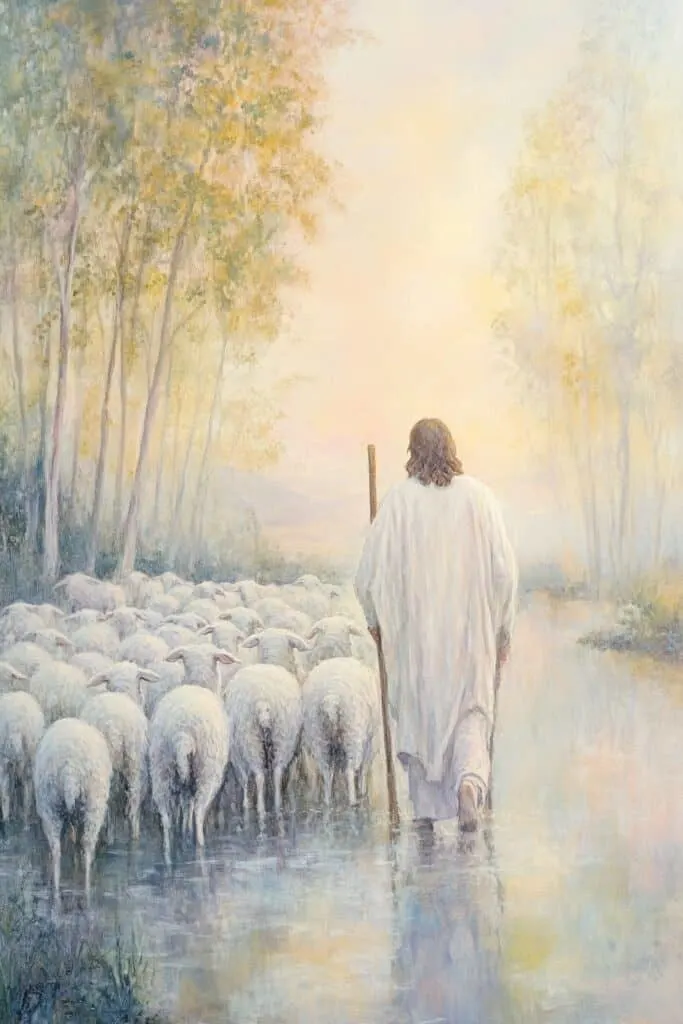
“I am the good shepherd. The good shepherd gives His life for the sheep.” — John 10:11 NKJV
Jesus does not call Himself a good shepherd. He is the Good Shepherd.
He knows His sheep, calls them, leads them, protects them, and lays down His life for them. He is not a careless hired hand who disappears the moment danger arrives.
Because Jesus is our Good Shepherd, we are deeply known and personally cared for. We are not an inconvenience to Him. We are not nameless faces lost somewhere in a massive crowd. The Shepherd knows His sheep.
18. The Door
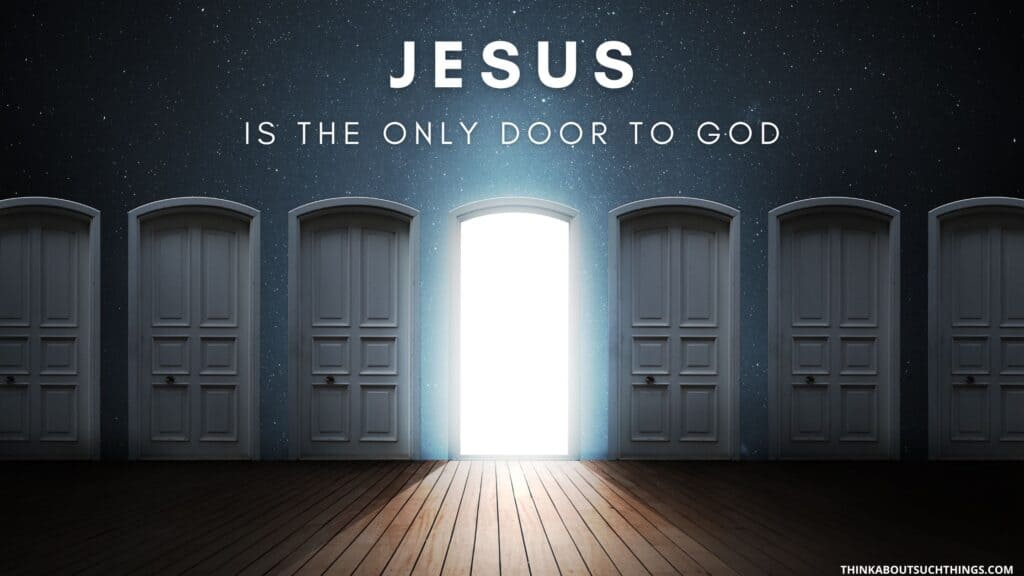
“I am the door. If anyone enters by Me, he will be saved.” — John 10:9 NKJV
In the same passage where Jesus describes Himself as the Good Shepherd, He also says, “I am the door of the sheep.”
A sheepfold offered a place of safety, and the entrance determined who or what came inside. Jesus presents Himself as the way into salvation, security, and abundant life.
He is not one possible doorway among many. He is the Door. Through Him, we have access to God and a place among His people. We are no longer spiritual outsiders searching for a way in.
19. The True Vine
“I am the vine, you are the branches. He who abides in Me, and I in him, bears much fruit.” — John 15:5 NKJV
A branch cannot produce fruit by gritting its teeth and trying harder. It bears fruit by remaining connected to the vine.
The same is true for us. Jesus is the source of our spiritual life, and lasting fruit grows as we abide in Him. Prayer, Scripture, obedience, and fellowship are not ways to impress Him. They help us remain close to the One we need.
Our worth is not measured by frantic productivity. We do not have to manufacture spiritual fruit to prove that we belong. We stay connected to Jesus, and His life produces change in us.
20. The Resurrection and the Life
“I am the resurrection and the life. He who believes in Me, though he may die, he shall live.” — John 11:25 NKJV
Jesus spoke these words to Martha while her brother Lazarus was in the tomb. He did not merely tell her that He could perform a resurrection. He declared, “I am the resurrection and the life.”
Resurrection is not an abstract doctrine separated from Jesus. Life is found in Him.
Death, loss, and apparently impossible circumstances do not get the final word. Because Jesus is alive, those who belong to Him have a living hope that reaches beyond the grave—and brings hope into the places that feel dead even now.
21. The Way, the Truth, and the Life
“I am the way, the truth, and the life. No one comes to the Father except through Me.” — John 14:6 NKJV
Jesus does not merely show us a way, teach us some truth, or give us a better life. He is the Way, the Truth, and the Life.
He is the way to the Father. He is the full and trustworthy revelation of truth. And He is the source of eternal life.
We do not have to invent our own truth, build our own identity, or find our own path back to God. Jesus Himself is the answer to each of those needs.
22. Chief Cornerstone
“Jesus Christ Himself being the chief cornerstone.” — Ephesians 2:20 NKJV
In ancient construction, the cornerstone helped establish the position and alignment of the entire structure. If that foundational stone was wrong, everything built from it would be affected.
Scripture calls Jesus the chief cornerstone. He is the foundation of the church and the standard by which everything else is aligned.
The world will offer us countless foundations for identity: appearance, achievement, relationships, popularity, politics, money, and other people’s approval. Every one of them can shift. A life built on Christ has a foundation that does not move.
23. Prince of Peace
“And His name will be called … Prince of Peace.” — Isaiah 9:6 NKJV


Isaiah’s prophecy describes the promised Child and Son who would rule with an everlasting kingdom. One of His prophetic titles is Prince of Peace.
Biblical peace is richer than the absence of conflict or a calm feeling. It carries the idea of wholeness, well-being, and restoration. Through the cross, Jesus made peace between us and God. Ephesians 2:14 even says, “He Himself is our peace.”
Because Jesus is the Prince of Peace, fear does not have to rule our identity. We may still walk through trouble, but we do so as people who have been reconciled to God and held by the One who is our peace.
24. King of Kings and Lord of Lords
“And He has on His robe and on His thigh a name written: KING OF KINGS AND LORD OF LORDS.” — Revelation 19:16 NKJV
Earthly rulers hold limited authority for a limited time. Jesus is the King above every king and the Lord above every lord.
His reign is absolute, righteous, and everlasting. No government, culture, spiritual power, or human authority sits above Him. Nothing catches the King of Kings by surprise.
When the world feels chaotic, this name brings us back to solid ground. We belong to the highest King. Our security does not ultimately rest in who appears powerful on earth, because Jesus still reigns.
25. Alpha and Omega
“I am the Alpha and the Omega, the Beginning and the End, the First and the Last.” — Revelation 22:13 NKJV
Alpha and omega are the first and final letters of the Greek alphabet. By calling Himself the Alpha and the Omega, Jesus declares that He is the Beginning and the End, the First and the Last.
He stands at the beginning of creation and at the completion of God’s redemptive plan. Nothing exists outside His authority, and no part of history will escape His final victory.
And the One who holds the whole story also holds your story. We may not understand every chapter while we are living it, but Jesus already sees the end from the beginning.
How the Names of Jesus Shape Our Identity
It is easy to read a list like this, underline a few beautiful verses, and move on. But the names of Jesus invite us into something much deeper.
They teach us to see ourselves in light of who He is.
Because Jesus is the Savior, we are rescued.
Because He is the Lamb of God, we can be forgiven and cleansed.
Because He is our Redeemer, our past no longer owns us.
Because He is the Good Shepherd, we are known, protected, and cared for.
Because He is the Light of the World, we do not have to remain in darkness.
Because He is the True Vine, we can bear fruit by remaining connected to Him.
Because He is the Prince of Peace, we have peace with God.
And because He is the King of Kings, our lives are held by a sovereign King.
Our identity does not begin by endlessly looking inward and asking ourselves who we would like to be. It begins by looking at Jesus. The better we know Him, the more clearly we can recognize the lies that have shaped the way we see ourselves.
Maybe you have believed that you are abandoned. Immanuel says God is with you.
Maybe you have believed that you are too dirty to come close to God. The Lamb of God says your sin can be taken away.
Maybe you feel lost and unsure of what comes next. The Good Shepherd knows how to lead you.
Maybe your past feels like the truest thing about you. Your Redeemer says otherwise.
This is why learning the names of Jesus can bring such incredible healing and change. We are not repeating nice religious phrases and hoping they make us feel better. We are replacing lies with the truth of who Jesus actually is.
And when we know who He is, we begin to understand who we are in Him.
A Simple Way to Study the Names of Jesus
You do not have to study all 25 names at once. Choose the name or title that speaks most directly to the season you are in right now.
Then:
- Read the main Scripture and the verses surrounding it.
- Write down what the passage reveals about Jesus.
- Ask what this truth changes about the way you see God.
- Consider what it says about your identity in Christ.
- Turn what you learned into a simple prayer.
For example, if you are feeling forgotten, spend time with Jesus as the Good Shepherd. If shame has been weighing on you, study the Lamb of God and your Redeemer. If everything feels uncertain, sit with the truth that Jesus is the Alpha and Omega.
Learning the names of Jesus is not merely about knowing what to call Him. It is about knowing Him.
And as we know Him more fully, we begin to see ourselves differently—not through the lens of our failures, wounds, fears, or other people’s opinions, but through the truth of who we are in Christ.
Scripture quotations marked NKJV are taken from the New King James Version®. Copyright © 1982 by Thomas Nelson. Used by permission. All rights reserved.


Melissa is a passionate minister, speaker and an ongoing learner of the Bible. She has been involved in church and vocational ministry for over 18 years. And is the founder of Think About Such Things. She has the heart to equip the saints by helping them get into the Word of God and fall more in love with Jesus. She also enjoys family, cooking, and reading.
She has spoken in churches in California, Oregon, Texas, and Mexico and has been featured in Guidepost Magazine and All Recipes Magazine. Read More…