
When most people think of Bible characters, names like Moses, David, or Mary come to mind. But get ready for a little shock – the Bible is packed with fascinating people whose stories rarely make it into Sunday school lessons.
These aren’t your typical biblical heroes. They’re the overlooked, the forgotten, and sometimes the downright bizarre characters who deserve their moment in the spotlight.
I’ve spent countless hours digging through scripture, and I can tell you that some of the most compelling stories belong to people you’ve probably never heard of.
Their tales are filled with courage, cunning, tragedy, and triumph. They remind us that God works through all kinds of people – not just the famous ones.
So grab your coffee and settle in. We’re about to meet seven unique Bible characters who prove that truth really is stranger than fiction.
1. Jael: The Tent Peg Warrior
But Jael, Heber’s wife, picked up a tent peg and a hammer and went quietly to him while he lay fast asleep, exhausted. She drove the peg through his temple into the ground, and he died.
Judges 4:21


During the time of the Judges, Israel was oppressed by Jabin, king of Canaan, and his military commander Sisera. When the Israelites finally fought back, Sisera’s army was defeated, and he fled on foot seeking shelter. He came to the tent of Jael, wife of Heber the Kenite.
Here’s where it gets interesting. Jael welcomed Sisera, gave him milk to drink, and covered him with a blanket. But while he slept, she took a tent peg and drove it through his temple into the ground. Talk about hospitality with a twist.
What makes Jael fascinating isn’t just her decisive action – it’s the complexity of her situation. The Kenites were supposed to be at peace with Jabin, yet Jael chose to side with Israel. Her story challenges us to think about courage, loyalty, and doing what’s right even when it’s dangerous.
The prophetess Deborah later praised Jael in song, calling her “most blessed of women.” Yet Jael’s story raises questions about violence, hospitality customs, and the role of women in ancient warfare that scholars still debate today.
2. Ehud: The Left-Handed Assassin
Ehud then approached him while he was sitting alone in the upper room of his palace and said, “I have a message from God for you.” As the king rose from his seat, 21 Ehud reached with his left hand, drew the sword from his right thigh and plunged it into the king’s belly.
— Judges 3:20-21
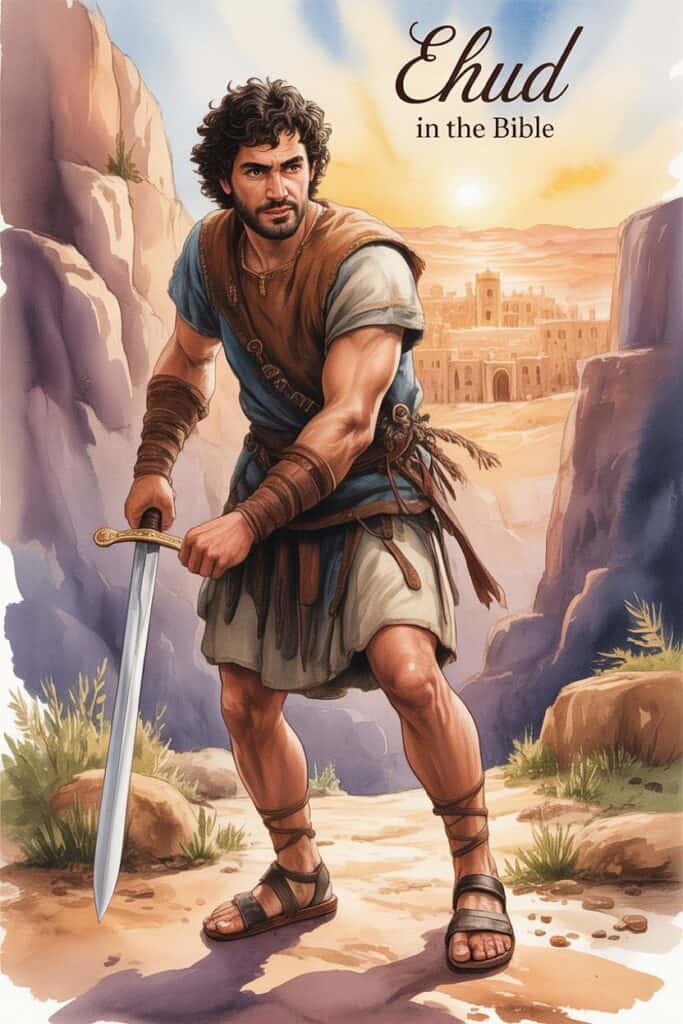
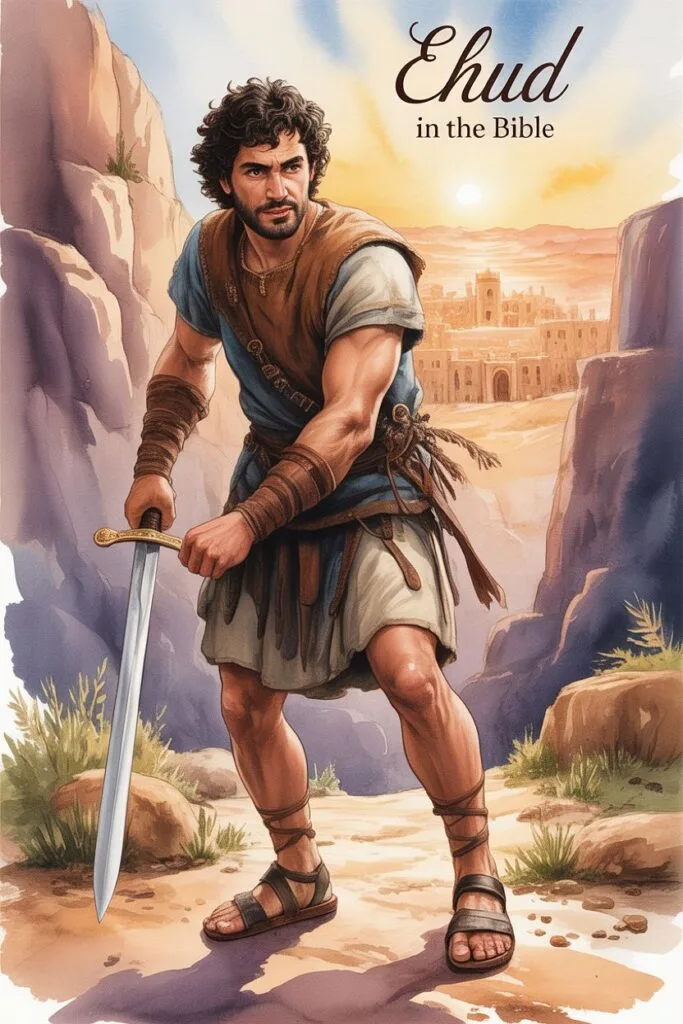
If biblical characters had action movies made about them, Ehud would definitely get one. This left-handed judge from the tribe of Benjamin orchestrated one of the most elaborate assassination plots in scripture.
Israel was under the thumb of Eglon, the obese king of Moab, who had been oppressing them for 18 years. The Israelites cried out to God, and He raised up Ehud as their deliverer. But Ehud’s method was anything but conventional.
Being left-handed was unusual in ancient times – so much so that guards wouldn’t think to check someone’s right side for weapons.
Ehud made a double-edged sword about 18 inches long and strapped it to his right thigh under his clothing. Then he went to deliver tribute to King Eglon, claiming he had a secret message from God.
When they were alone, Ehud told the king, “I have a message from God for you.” As Eglon rose from his throne, Ehud drew his sword with his left hand and plunged it into the king’s belly. The Bible tells us the sword went in so deep that the handle disappeared, and the king’s fat closed over it.
Ehud’s story is both thrilling and unsettling. It shows how God can use anyone – even someone with what others might consider a disadvantage – to accomplish His purposes. After the assassination, Ehud rallied the Israelites and led them to defeat the Moabites, giving the land peace for 80 years.
3. Rizpah: The Mother Who Refused to Give Up
Rizpah daughter of Aiah took sackcloth and spread it out for herself on a rock. From the beginning of the harvest till the rain poured down from the heavens on the bodies, she did not let the birds touch them by day or the wild animals by night.
— 2 Samuel 21:10


Some stories in the Bible are so heartbreaking they stay with you long after you read them. Rizpah’s story is one of those – a tale of a mother’s love that defied kings and social conventions.
Rizpah was a concubine of King Saul. After Saul’s death, his son Ish-bosheth accused Abner, Saul’s former general, of sleeping with Rizpah. This accusation led to a political fallout that eventually helped David consolidate his kingdom. But Rizpah’s real story begins later.
Years into David’s reign, Israel faced a three-year famine. When David inquired of the Lord, he learned it was because of Saul’s bloodguilt against the Gibeonites. To make amends, David handed over seven of Saul’s descendants to the Gibeonites, who hanged them. Among these were Rizpah’s two sons.
Here’s where Rizpah’s story becomes both tragic and heroic. She took sackcloth, spread it on a rock, and stayed there from harvest time until the rains came – months of vigil over her sons’ bodies. She fought off birds by day and wild animals by night, refusing to let anything desecrate their remains.
When David heard about Rizpah’s devotion, he was moved to gather the bones of Saul and Jonathan and give them, along with the seven hanged men, a proper burial. Rizpah’s persistent love didn’t just honor her sons – it prompted a king to do what was right.
Her story reminds us that sometimes the most powerful acts of faith happen not on battlefields or in palaces, but in quiet moments of refusing to give up on those we love.
4. Shamgar: The Ox Goad Hero
After Ehud came Shamgar son of Anath, who struck down six hundred Philistines with an oxgoad. He too saved Israel.
— Judges 3:31


In just one verse – Judges 3:31 – we meet one of the Bible’s most enigmatic warriors. Shamgar, son of Anath, killed 600 Philistines with an ox goad and saved Israel. That’s it. No backstory, no details about his life, just this incredible feat that earned him a place among the judges.
An ox goad was essentially a long wooden stick with a metal point, used to prod cattle while plowing. It wasn’t exactly military-grade equipment. Yet Shamgar wielded this farming tool to defeat hundreds of trained warriors.
What I find captivating about Shamgar is how he represents the ordinary person thrust into extraordinary circumstances. We don’t know if he was trained for battle or if he just happened to be in the right place at the right time with the right heart. His story suggests that God can use anyone, regardless of their background or resources.
Some scholars believe Shamgar might not have even been an Israelite, based on his name and his father’s name, which sound more Canaanite. If that’s true, it makes his story even more remarkable – a foreigner who became Israel’s deliverer.
The brevity of Shamgar’s story is part of its power. Sometimes the most profound acts don’t need lengthy explanations. They speak for themselves.
5. Huldah: The Prophet Who Verified Scripture
Hilkiah the priest, Ahikam, Akbor, Shaphan and Asaiah went to speak to the prophet Huldah, who was the wife of Shallum son of Tikvah, the son of Harhas, keeper of the wardrobe. She lived in Jerusalem, in the New Quarter.
15 She said to them, “This is what the Lord, the God of Israel, says: Tell the man who sent you to me,
—2 Kings 22:14-15


In a time when prophecy was dominated by men, Huldah stands out as a respected female prophet whose words carried enormous weight.
When King Josiah needed to verify the authenticity of the Book of the Law found during temple renovations, he didn’t consult Jeremiah or Zephaniah – both prophets active at the time. He sent his officials to Huldah.
Living in the Second Quarter of Jerusalem with her husband Shallum, Huldah was accessible yet authoritative. When the king’s delegation approached her with the newly discovered scroll, she confirmed its authenticity and delivered both judgment and hope.
She proclaimed that disaster would indeed come upon Jerusalem because of their idolatry, but because Josiah’s heart was tender and he humbled himself before God, he wouldn’t live to see the destruction. Her prophecy proved accurate – Josiah died in battle before Babylon destroyed Jerusalem.
What makes Huldah remarkable isn’t just her prophetic gift, but the respect she commanded. As a woman of that time, high-ranking officials sought her counsel over other available prophets.
She represents how God chooses unlikely messengers and how wisdom can be found in unexpected places.
Huldah’s story also shows the crucial role of scripture authentication. Her validation of the Law book helped launch Josiah’s reforms and shaped Judah’s spiritual direction.
6. Onesiphorus: The Friend Who Wasn’t Ashamed
May the Lord show mercy to the household of Onesiphorus, because he often refreshed me and was not ashamed of my chains. 17 On the contrary, when he was in Rome, he searched hard for me until he found me. 18 May the Lord grant that he will find mercy from the Lord on that day! You know very well in how many ways he helped me in Ephesus.
— 2 Timothy 1:16-18
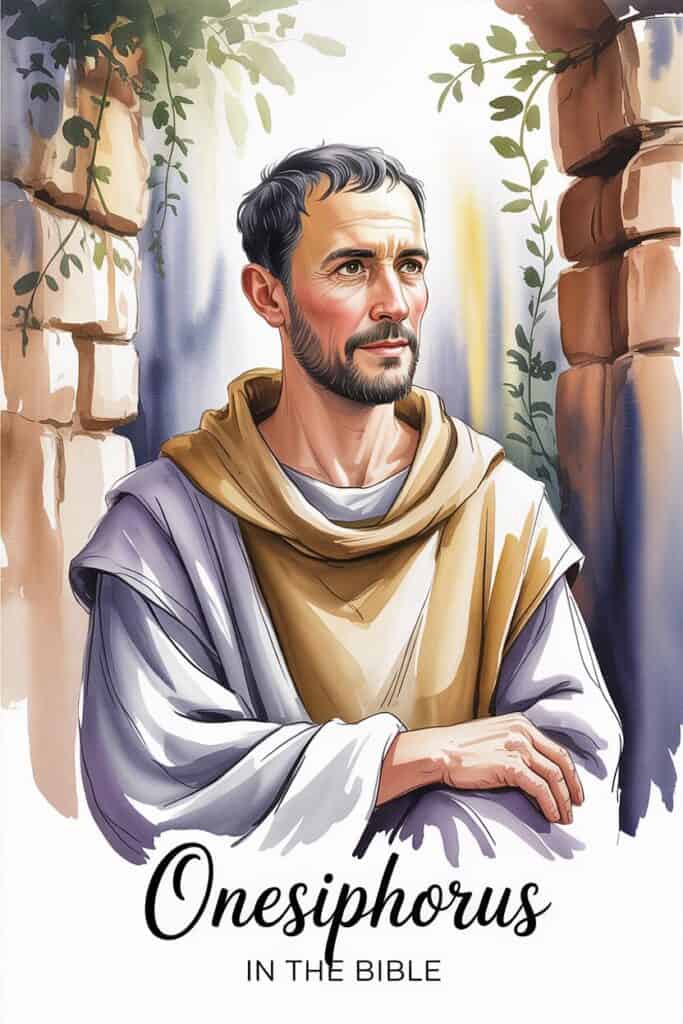
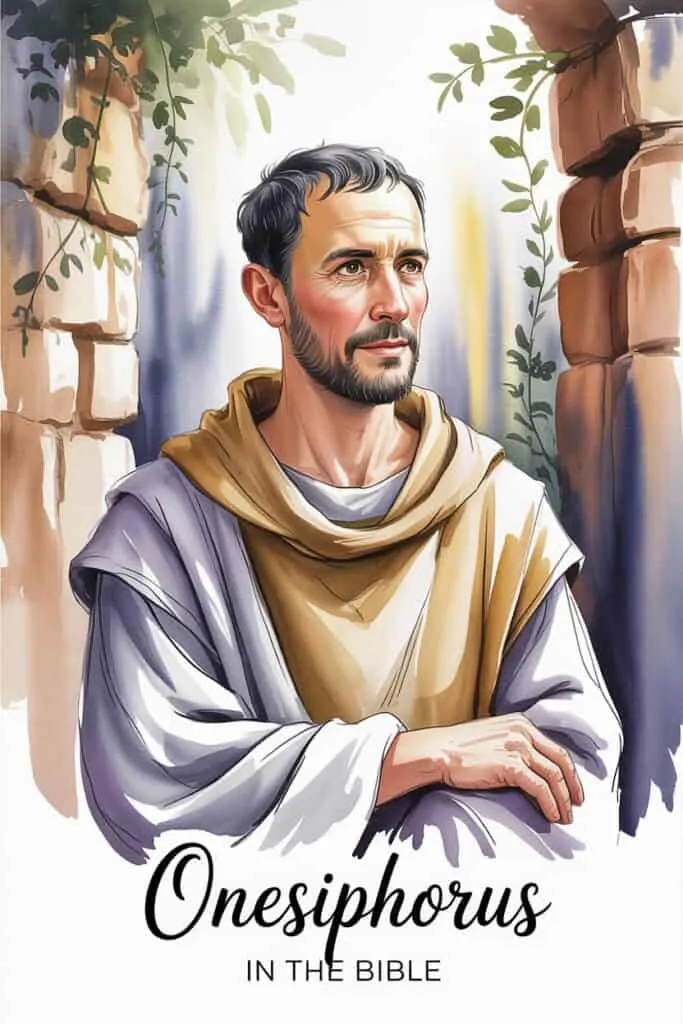
Sometimes the most beautiful stories in the Bible are tucked away in brief mentions. Onesiphorus is one of those hidden gems – a man whose friendship shines brightly in just a few verses in Paul’s second letter to Timothy.
Paul was facing his final imprisonment in Rome, and most of his friends had abandoned him. In this dark hour, he wrote about Onesiphorus with deep gratitude: “May the Lord show mercy to the household of Onesiphorus, because he often refreshed me and was not ashamed of my chains.”
The phrase “not ashamed of my chains” speaks volumes about both Paul’s situation and Onesiphorus’s character. Being associated with a prisoner, especially one charged with sedition against Rome, was dangerous. Many people would have distanced themselves to protect their own interests.
But not Onesiphorus. Not only did he visit Paul, but he actively searched for him when he arrived in Rome. This wasn’t casual friendship – this was loyalty that cost something. He brought comfort to a man facing execution, risking his own safety to do so.
Paul’s prayer for Onesiphorus and his household reveals the apostle’s deep appreciation for this faithful friend. In a letter filled with warnings about end-times difficulties and concerns about Timothy’s ministry, Onesiphorus represents the kind of loyal friendship that sustains us through our darkest moments.
7. Tabitha (Dorcus): The Seamstress Who Conquered Death
In Joppa there was a disciple named Tabitha (in Greek her name is Dorcas); she was always doing good and helping the poor.
— Acts 9:36

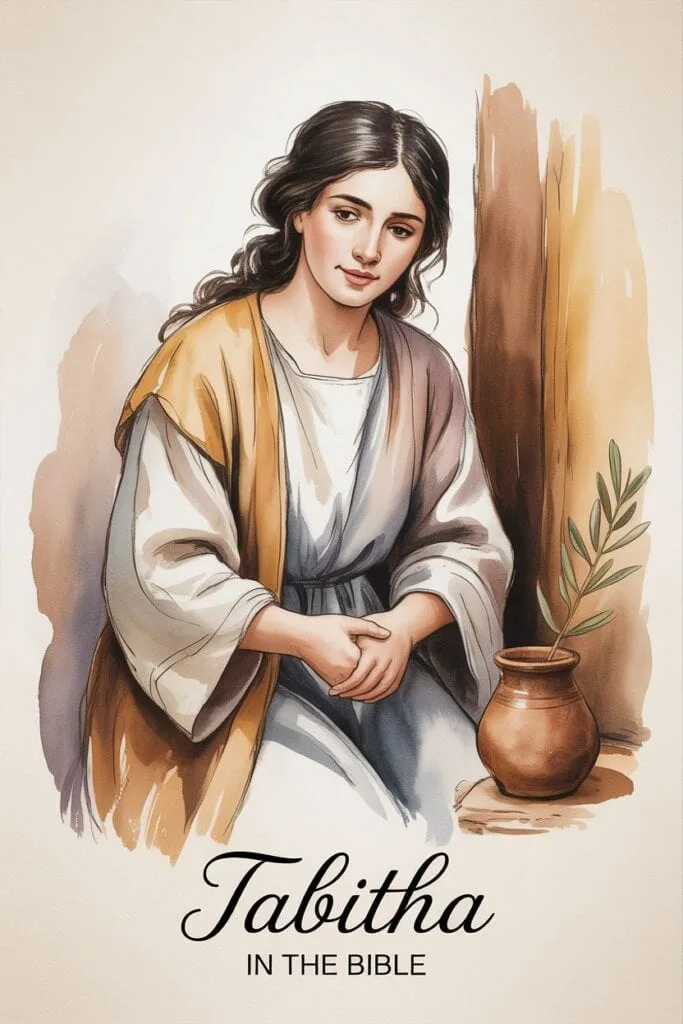
In the coastal town of Joppa lived a woman whose story bridges the gap between ordinary service and extraordinary miracle. Known by both her Aramaic name Tabitha and her Greek name Dorcas – both meaning “gazelle” – she was renowned for her good works and acts of charity.
Tabitha was particularly known for making clothes for widows, a crucial service in a society where widows often faced destitution. She wasn’t wealthy or politically connected, but she used her skills to care for the most vulnerable members of her community.
When Tabitha became sick and died, her friends prepared her body and laid her in an upper room. But they had heard that Peter was nearby in Lydda, so they sent for him. When Peter arrived, the widows showed him the robes and clothing Tabitha had made for them while she was still alive.
What happened next was extraordinary. Peter sent everyone out of the room, knelt down, prayed, and then said, “Tabitha, get up.” She opened her eyes, sat up, and Peter helped her to her feet. The news of this miracle spread throughout Joppa, and many believed in the Lord.
Tabitha’s story is unique because it shows how even quiet acts of kindness can leave a powerful legacy. She wasn’t a prophet, a warrior, or a ruler—just someone who cared deeply and served faithfully. Yet in the end, her love and generosity inspired such devotion in her community that they couldn’t bear to lose her, and her story became a testament to the life-changing impact of compassion.
These seven characters may not top anyone’s list of Bible heroes, but their lives are anything but forgettable. Each one, in their own way, challenges what we think it means to be significant. Some fought with courage, others showed radical compassion, and a few simply refused to give up, even in the darkest situations.
So next time you flip through the pages of Scripture, don’t skip over the names you don’t recognize. Dig a little deeper—you might just find a story that changes the way you see faith, courage, or persistence. After all, the Bible is full of ordinary people living out extraordinary stories, and maybe, just maybe, there’s one waiting to inspire you too.


Melissa is a passionate minister, speaker and an ongoing learner of the Bible. She has been involved in church and vocational ministry for over 18 years. And is the founder of Think About Such Things. She has the heart to equip the saints by helping them get into the Word of God and fall more in love with Jesus. She also enjoys family, cooking, and reading.
She has spoken in churches in California, Oregon, Texas, and Mexico and has been featured in Guidepost Magazine and All Recipes Magazine. Read More…