
In this article, we will continue on our study of numbers in the Bible, with this being a focus on the Biblical meaning of the number 9. So, grab your Bible, and let’s explore…
The number 9 is perhaps the most widely-regarded Christian number after from number 7. Most Christians associate 9 with various Christian values, but most are unsure why or where the connections come from.
Another thing we can see is that 999 is the invert of the number of the beast in Revelations. I’ve seen some odd things with this, but that was not true in Biblical times with the Hebrew or Greek numbering systems. In contrast, the biblical symbolism of the number twelve signifies completeness and divine order, as seen in the twelve tribes of Israel and the twelve apostles. This number often represents a connection between heaven and earth, emphasizing significant moments in spiritual history. Such meanings suggest that numbers were more than mere figures; they carried deep significance in conveying spiritual truths.
9 in the Bible is quite an interesting number and we are going to explore what it means, but let’s first look at the Hebrew alphabet. the biblical symbolism of the number 8 is often associated with new beginnings and resurrection. In the context of the Bible, it signifies a fresh start, as seen in the story of Noah, where after eight souls emerged from the ark, a new era began for humanity. This connection reinforces the idea of renewal and hope woven throughout the scriptures. the biblical significance of the number 5 is often linked to grace and favor. In various passages, it symbolizes God’s kindness towards humanity, as seen in the five blessings that were bestowed upon the people of Israel. This concept emphasizes the importance of divine support and mercy throughout the biblical narrative.

Table of Contents
9 In The Bible: The Hebrew
The 9th letter of the Hebrew alphabet is Tet or Teth, and most Hebrew scholars associate it with good vs. evil.
The letter symbolizes a snake in basket, which is classically associated with evil in Jewish custom, but the first use of the letter was in Genesis 1:4, which says,
And God saw the light, that it was good; and God divided the light from the darkness.
The word “good” is the first use of Teth in the Bible, indicating its association with “good” and creating the paradox.
Other classic Hebrew meanings include purity and impurity, new life, a new civilization, and fruit.
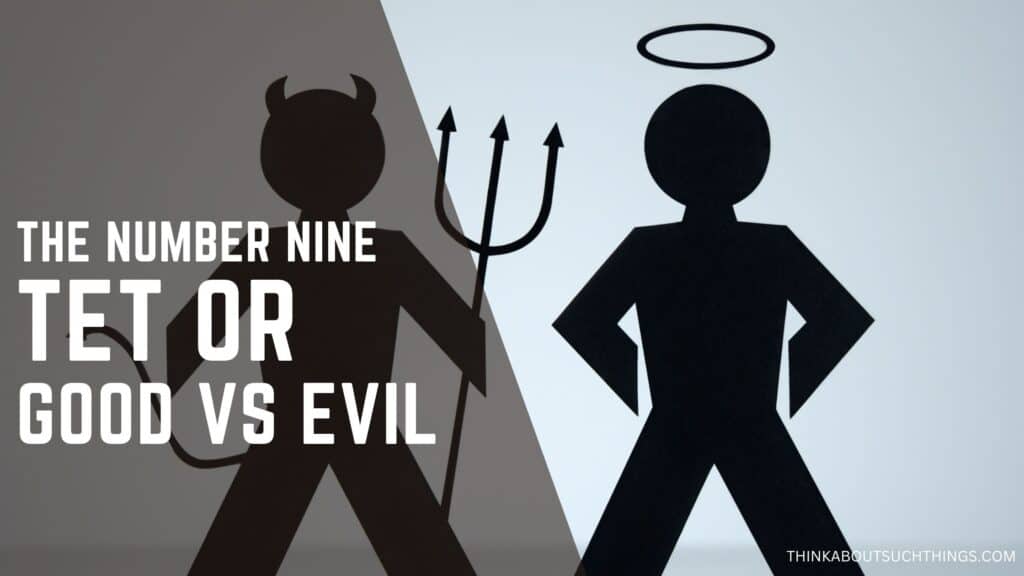
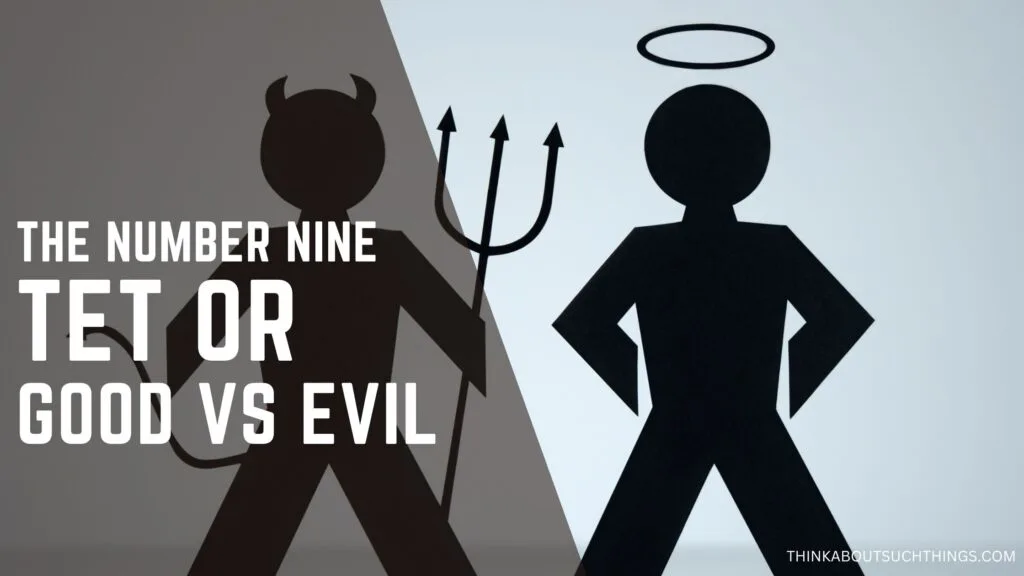
This stems partly from the inverted nature of the letter’s symbol, which indicates “hidden goodness,” like a pregnant woman, and it speaks of fruitfulness and the creation of something new.
Chabad gives a little more insight into the gematria…
“The numerical value of tes is nine. This corresponds to the nine months of pregnancy. Furthermore, the number nine is a “true” number. Truth or אמת (emes), is spelled alef—the first letter of the alef-beis; mem—the middle letter; and the tav—the last letter. The lesson is that something that is true must be true at the beginning, middle, and end.“
The Biblical Meaning Of The Number 9
In Biblical terms, though the meaning of fruitfulness and new life is part of it, we see it extended a bit more.
Nine is three groups of three (because 3 x 3 = 9). So, we can see that it’s the value or meaning of the number 3 multiplied three times, and as we’ve already seen, the number three has two primary implications in the Bible: The biblical significance of the number 4 is often associated with completeness and creation, reflecting the four corners of the earth and the four elements in nature. In many passages, this number represents stability and the idea of the world being firmly established. Just as the number 3 signifies divine perfection, the number 4 embodies the foundational aspects of life, underscoring its importance in biblical texts. The biblical significance of the number 1 emphasizes unity and the oneness of God, serving as a fundamental principle in monotheistic beliefs. It reflects the idea that everything originates from one source, which is central to many theological discussions. This notion of singularity is often linked to the importance of faith and the belief in one divine creator throughout scripture.
- Completeness, but with more to come (a new beginning). For example, Jesus was raised after three days. His mission was completed, but it was only the beginning of His Kingdom.
- An undeniable emphasis. Wherever a word or phrase is repeated three times, it means that God is emphasizing its importance and stating that it will come to pass without a doubt.
Since the number 9 is 3×3, we could say that its completeness is being emphasized three times – it’s wholly complete and undeniable, which usually means that the “more to come” no longer applies – it’s already come to pass.
Nothing more can or will be added to it; it’s final.
Biblical Examples Of The Number 9
We can see this meaning reflected throughout both the Old and New Testaments. Though the number nine doesn’t occur too frequently in the Bible, we can still find many instances where nine is mentioned or referenced that are of vital importance. Let’s study some of them. the significance of the number 7 is particularly prominent in both creation narratives and various scriptural contexts. For example, the seven days of creation in Genesis underscore the idea of completeness and divine order. Additionally, the number appears in significant events such as the seven trumpets in the Book of Revelation, symbolizing profound transformation and judgment. the biblical significance of the number 6 is often associated with imperfection and incompleteness, contrasting the perfect number seven. This numeral appears in various contexts, such as the six days of work before the Sabbath and the mark of the beast in Revelation, which serves as a warning against spiritual deception. Such instances illustrate how the number 6 serves as a reminder of the need for divine intervention and the quest for spiritual fulfillment.
Yom Kippur – The Day Of Atonement
Yom Kippur is also known as the Jewish Day of Atonement and is one of the great religious festivals in Jewish customs. It was established in Leviticus 16:29, which says…
“And it shall be a statute to you forever that in the seventh month, on the tenth day of the month, you shall afflict yourselves and shall do no work, either the native or the stranger who sojourns among you.” dream interpretations in the Bible often explore the significance of divine messages communicated through visions and dreams. These interpretations can vary widely, drawing from cultural and historical contexts found within scripture. Understanding these meanings can provide deeper insights into one’s spiritual journey and relationship with God. The symbolism of the number 40 often represents periods of testing, trials, or purification in various cultures and religious texts. In biblical narratives, it is notably linked to significant events, such as the 40 days and nights of rain during the flood and the Israelites wandering in the wilderness for 40 years. Recognizing this symbolism can enrich one’s understanding of personal challenges and the transformative experiences that accompany them.
Yom Kippur starts on the tenth day, but in Jewish custom, the day begins at sunset the day before, so Yom Kippur starts at sunset on the 9th day of the seventh month.
Interestingly, Yom Kippur is the only Jewish feast that requires fasting, and it’s about atoning for your sins of the past year and repenting from them. It’s associated with the day that Moses found the Israelites worshiping the golden calf, forcing them to repent and presenting them with the Ten Commandments.
So, why is nine so crucial in this context?
Because 9 means completion.
We know that the final and complete atonement for our sins only happened with Jesus, but God knew, even then, that He would make provision for the atonement. Jesus’ sacrifice spans all time and covers the people’s sins even back before the time of Moses.
It was never the law that atoned and brought salvation; it was Jesus’ sacrifice, and that sacrifice was already complete and full at the time when the people did not fully understand God’s plan of redemption.
The Nine Beatitudes
In Matthew 5:3-11, during the sermon on the mount, we find Jesus sharing the beatitudes.
“Blessed are the poor in spirit,
For theirs is the kingdom of heaven.
Blessed are those who mourn,
For they shall be comforted.
Blessed are the meek,
For they shall inherit the earth.
Blessed are those who hunger and thirst for righteousness,
For they shall be filled.
Blessed are the merciful,
For they shall obtain mercy.
Blessed are the pure in heart,
For they shall see God.
Blessed are the peacemakers,
For they shall be called sons of God.
Blessed are those who are persecuted for righteousness’ sake,
For theirs is the kingdom of heaven.
 Blessed are you when they revile and persecute you, and say all kinds of evil against you falsely for My sake.  - Matthew 5:3-11
The purpose of the beatitudes is to teach us the character of a follower of Christ and citizen of the Kingdom of God. It’s about being humble and seeing the blessing in adversity.
The fact that there are nine means that this is the complete character of Christ’s followers and reflects the nature of Jesus Himself, meaning that character is already complete in Him.
Jesus’ Death
In Mark 15:34-39 we see that Jesus died at the 9th hour of the day. In modern terms, that’s approximately 3 PM (since the day was considered to begin at 6 AM).
What makes the 9th hour very significant is Jesus’ final words, which we can see in John 19:30:
“When Jesus had received the sour wine, He said, ‘It is finished,’ and He bowed His head and gave up His spirit.”
The words “It is finished” meant that Jesus completed His mission and paid the price in full, not failing even once. The complete and total redemption for all humanity was paid.
The Gifts Of The Holy Spirit
for to one is given the word of wisdom through the Spirit, to another the word of knowledge through the same Spirit, 9 to another faith by the same Spirit, to another gifts of healings by the same Spirit, 10 to another the working of miracles, to another prophecy, to another discerning of spirits, to another different kinds of tongues, to another the interpretation of tongues. -1 Corinthians 12:8-10
1 Corinthians 12:8-10 we see the 9 gifts of the Holy Spirit that He gives believers for the common good of the church.
There are other gifts mentioned throughout the new testament, but these are 9 key ones that the Apostle Paul emphasizes in 1 Corinthians when talking about the Holy Spirit.
Though diverse in nature and use, we can see that the nine gifts are all part of the one Spirit of God. We can see the nature of completion in that, as those are all the gifts we require for the common good of the church. We are complete and equipped when the church has the nine gifts in action!
The Fruit Of The Holy Spirit
While the gifts of the Holy Spirit are tools that He gives us to help equip the church, the fruit of the Holy Spirit refers to the character the Holy Spirit gives us when we walk in the Spirit.
Galatians 5:22-23 tells us that the nine attributes are the fruit of the Holy Spirit.
But the fruit of the Spirit is love, joy, peace, longsuffering, kindness, goodness, faithfulness, gentleness, self-control. Against such there is no law.
Many look at these attributes and view them as different fruits of the Holy Spirit. They may seem like multiple, but the fruit should be seen as one.
The nine aspects, attributes, or characteristics make up one complete fruit. You can’t pick a choose which “fruit” you will have.
The word being used is the Greek word “karpos” (Strong’s Concordance number 2590), which also refers to everything done in true partnership with Christ, as we can see in Jesus’ reference to the vine and branches in John 15:1-2.
“I am the true vine, and My Father is the vinedresser. 2 Every branch in Me that does not bear fruit He takes away; and every branch that bears fruit He prunes, that it may bear more fruit.
The fruit of the Holy Spirit is the character that a believer should automatically have and cultivate when they are in true union with Christ. We become complete as the Holy Spirit makes us more like Christ and become one with Him.
Returning to the Hebrew interpretations of the number nine and the letter teth, the fruit of the Spirit also shows how something good can come from evil. It shows how we, as the new creation, can bring forth new life in those whose lives we touch with the gospel of the Kingdom. The symbolism of the number 2 in scripture often represents division and duality, shedding light on the contrasts in our spiritual journey. This duality encourages believers to recognize the balance between good and evil, as well as the importance of unity within the body of Christ. By embracing these teachings, we can better appreciate the blessings that arise from faithful partnerships and the diverse gifts each person brings to the community.
The number 9 in the Bible points to a perfect completion, meaning there is nothing more to be added. It refers to many things, including the complete redemption we have because of Christ’s sacrifice, how we are complete in Him through the Holy Spirit, and how we can now bear fruit and bring forth new life in creation as representatives of His Kingdom on earth.
More On Numbers Of The Bible
I hope you’ve enjoyed exploring the biblical meaning of the number 9 in this article. If you’re still looking to expand and gain more knowledge on numbers, I got you covered! I’ve been working on a series of articles on different numbers. Have a look down below! In these upcoming articles, we will delve deeper into the biblical symbolism of numbers explained, uncovering the significance of each digit and how they relate to spiritual teachings. You’ll discover fascinating insights and connections that have shaped beliefs and traditions throughout history. Stay tuned for a journey through numerology that you won’t want to miss! As we continue our exploration, we’ll also examine the biblical significance of the number 10, a digit that represents completeness and divine order. From the Ten Commandments to the ten plagues of Egypt, this number is woven deeply into the fabric of scripture, symbolizing fullness in God’s covenant with humanity. Join us as we uncover the profound lessons and themes associated with this powerful number in biblical narratives.
Numbers in the Bible Series




















Melissa is a passionate minister, speaker and an ongoing learner of the Bible. She has been involved in church and vocational ministry for over 18 years. And is the founder of Think About Such Things. She has the heart to equip the saints by helping them get into the Word of God and fall more in love with Jesus. She also enjoys family, cooking, and reading.
She has spoken in churches in California, Oregon, Texas, and Mexico and has been featured in Guidepost Magazine and All Recipes Magazine. Read More…